
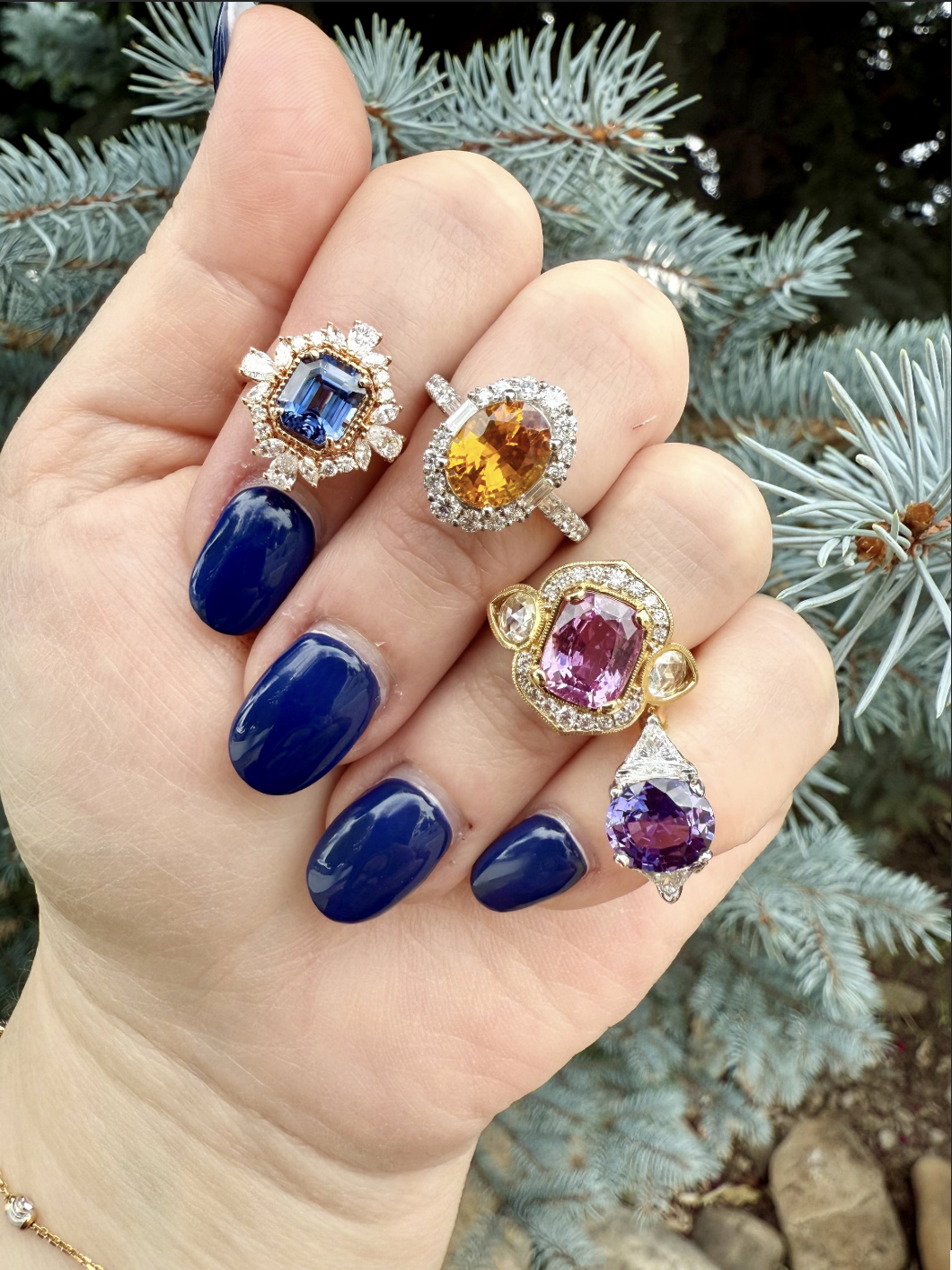
Walk into a fine jewelry store and you might see two gemstones that, at first glance, appear remarkably similar. They may be the same type of gemstone, nearly the same size, and even look similar in color—yet one may be worth several times more than the other.
Why?
One of the things we love most about natural gemstones is that no two are exactly alike. Unlike something manufactured to a specific set of specifications, gemstones are products of nature. Their color, rarity, origin, treatments, clarity, cut, and even the circumstances under which they formed can all influence their value.
Understanding those differences can completely change the way you look at fine jewelry.
Bigger Doesn't Always Mean More Valuable
Carat weight is one of the easiest gemstone characteristics to understand, so it's natural to assume that a larger stone should be worth more.
But size is only one piece of the puzzle.
A smaller gemstone with exceptional color, rarity, clarity, or provenance can be significantly more valuable than a much larger stone of the same variety.
This is especially true with colored gemstones. While diamonds have well-established grading systems, evaluating colored stones is often much more nuanced. Two sapphires of identical carat weight, for example, can have dramatically different values depending on their color, treatment, origin, and overall quality.
And September's birthstone happens to be one of the best examples.
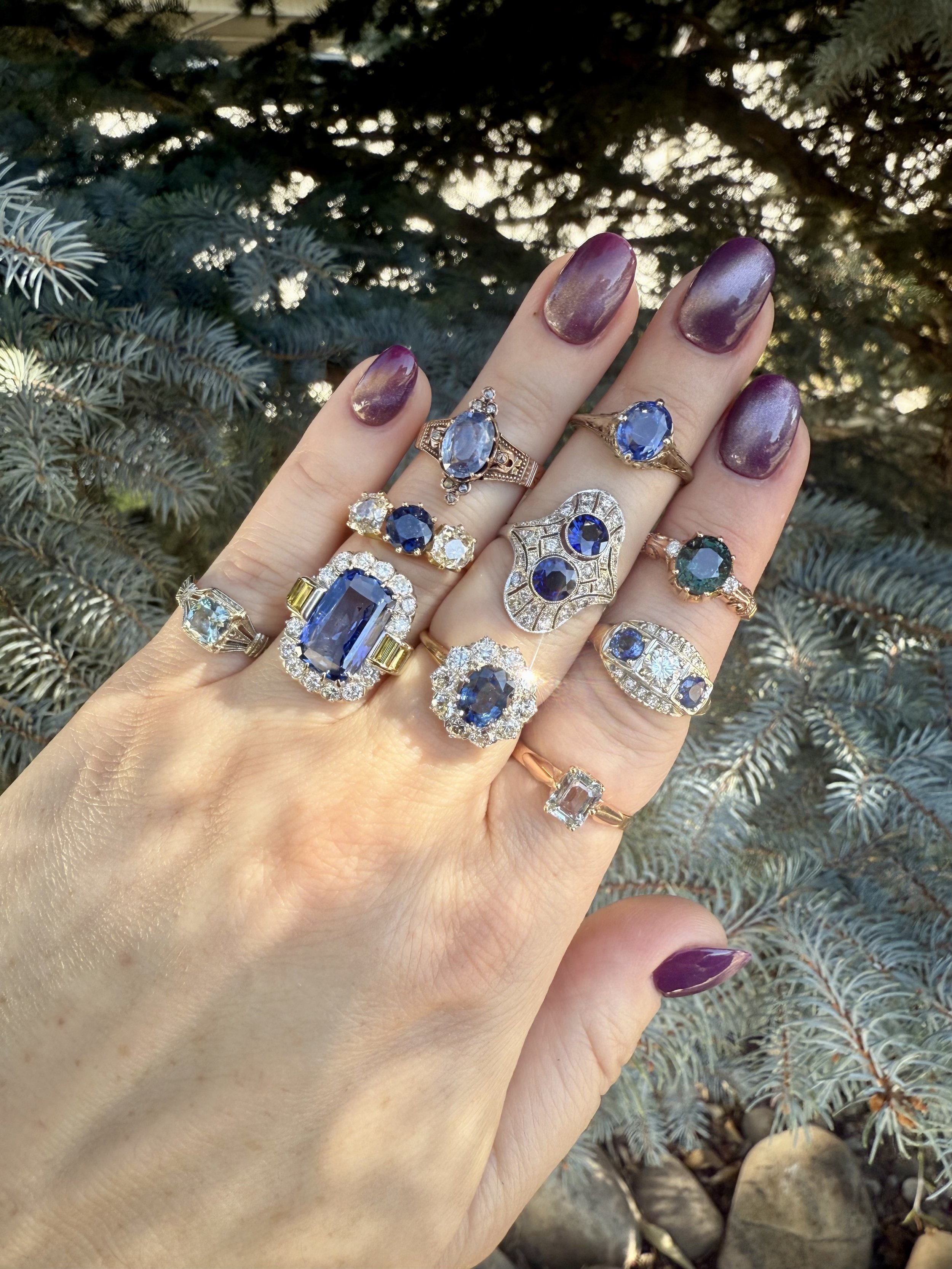
Sapphire: One Gemstone, an Extraordinary Range of Value
When most people hear the word sapphire, they immediately picture blue.
But sapphires occur naturally in nearly every color of the rainbow, with red being the exception—because gem-quality red corundum is classified as ruby.
Sapphires can be blue, pink, yellow, orange, green, purple, color-changing, or even display combinations of colors within a single stone.
And within each of those categories, there can be an enormous range in value.
A richly saturated natural sapphire with beautiful color, excellent transparency, and no evidence of heat treatment can command a significant premium over a sapphire of similar size that has undergone treatment or has less desirable color.
So what exactly are we looking for?
1. Color Can Matter More Than Carat Weight
With many colored gemstones, color is king.
The most desirable stones generally possess a beautiful balance of hue, tone, and saturation. A gemstone can be too light, too dark, too gray, too brown, or so heavily saturated that it loses brilliance.
The ideal color varies depending upon the gemstone.
With blue sapphire, for instance, beautifully saturated blues that remain lively and bright are particularly desirable. With emeralds, rich green color can outweigh inclusions that would significantly affect the value of another gemstone.
Color can also make unusual stones incredibly collectible.
A sapphire with a distinctive teal hue, a rare combination of colors, or an exceptional color change may appeal to a collector for entirely different reasons than a traditional royal-blue sapphire.
This is why judging a gemstone solely by its carat weight rarely tells the whole story.
2. Treatment—or the Lack of It—Can Make a Significant Difference
Many consumers are surprised to learn that gemstone treatments are common within the jewelry industry.
Heat treatment, for example, has been used for centuries to improve the color and clarity of certain gemstones and is widely accepted within the trade when properly disclosed.
But an exceptional gemstone that naturally possesses beautiful color without treatment can be considerably rarer.
Sapphires are a wonderful example.
A fine-quality natural sapphire showing no evidence of heat treatment may command a substantial premium because relatively few sapphires come out of the earth possessing exceptional color and clarity without enhancement.
That doesn't mean a heated sapphire isn't beautiful or valuable. Quite the opposite—many extraordinary sapphires have been traditionally heat treated.
The important distinction is rarity and disclosure.
Knowing whether a gemstone has been treated allows you to understand what you're purchasing and why it is valued the way it is.
3. Where a Gemstone Comes From Can Matter
Sometimes a gemstone's geographic origin adds another layer to its desirability.
Certain mining regions have become famous for producing gemstones with particularly sought-after characteristics.
Sapphires from Kashmir, Burma (Myanmar), and Sri Lanka have long been associated with exceptional examples of the stone. Montana sapphires have also developed a passionate following, particularly for their distinctive blues, greens, teals, and uniquely American origin.
Origin alone does not make a gemstone exceptional—a beautiful stone is still judged on its individual merits.
But when extraordinary quality is combined with a historically significant or highly sought-after origin, the result can be particularly rare.
For important gemstones, an independent gemological laboratory may be able to provide an opinion regarding geographic origin in addition to identifying treatments.
4. Rarity Isn't Always Obvious
Some of the world's rarest gemstones aren't necessarily the names everyone recognizes.
Certain varieties of spinel, tourmaline, garnet, sapphire, alexandrite, and other natural gems can be extraordinarily difficult to find in exceptional quality.
Even within a relatively familiar gemstone family, a particular color or natural characteristic may occur only rarely.
This is one reason we encourage clients not to shop for colored gemstones by name alone.
Sometimes the most remarkable stone in the case isn't the one you originally came in looking for.
5. Nature Occasionally Creates Something Truly Unusual
Some gemstones possess natural optical phenomena that make them especially fascinating.
Alexandrite can change dramatically in color depending upon the lighting. Certain sapphires and rubies display a star-like effect known as asterism. Some gemstones show distinct bands or zones of color, while others seem to glow from within.
These characteristics occur because of the gemstone's internal structure and the way light interacts with it.
When the phenomenon is strong, attractive, and naturally occurring, it can add considerably to a gemstone's rarity and desirability.
And sometimes these unusual characteristics are exactly what make a stone feel personal.
6. Cut and Craftsmanship Matter, Too
A gemstone's beauty isn't determined by nature alone.
The person who cuts the stone has an enormous influence on how we ultimately see it.
A skilled cutter must balance several competing priorities: preserving weight, maximizing color, working around inclusions, and creating proportions that allow light to move beautifully through the gemstone.
With rare material, this can be especially challenging.
An unusual antique cut, an expertly executed modern cut, or a shape specifically chosen to showcase a gemstone's natural color can make an already beautiful stone extraordinary.
So, What Makes a Gemstone Valuable?
There isn't one simple formula.
Value is created by a combination of:
Rarity
Color
Carat weight
Clarity
Cut
Treatment
Geographic origin
Natural phenomena
Overall beauty and desirability
And the importance of each factor changes depending upon the gemstone.
That complexity is exactly what makes the world of natural colored gemstones so fascinating.
The Beauty of Choosing Something Nature Made
At Copper Canary, some of our favorite moments happen when a client discovers a gemstone they weren't expecting to fall in love with.
Maybe it's a sapphire that isn't blue.
Maybe it's a tourmaline containing two completely different colors.
Maybe it's an antique diamond whose hand-cut facets don't look anything like a modern brilliant.
Or perhaps it's a gemstone with an unusual inclusion or color pattern that makes it unmistakably one-of-a-kind.
Those natural differences aren't imperfections to us. They're part of the story.
And when you understand just how many factors had to come together for an exceptional gemstone to exist, you begin to understand why two stones that appear similar on paper can be worlds apart in rarity—and in value.
Looking for a natural gemstone that's a little out of the ordinary?
Visit us at our Meridian showroom. We would love to show you some of our favorite sapphires, spinels, tourmalines, emeralds, diamonds, and other natural treasures—and help you understand exactly what makes each one special. Found the one? Our jewelry designer, Allie, can create a custom piece around it.