
Engagement Rings Through the Decades: A Style Guide From the 1880s to the 1990s
Every decade left its mark on the engagement ring. Metals changed, diamond cuts changed, and so did what couples wanted. This guide walks through engagement rings decade by decade, from Victorian clusters to 1990s solitaires. It's for anyone shopping for a vintage ring or trying to date a family heirloom. By the end, you'll know how to spot each era at a glance. Want to see the real thing? Browse just some of our antique engagement rings online or visit our Meridian showroom.
Victorian Engagement Rings (1880s–1890s)
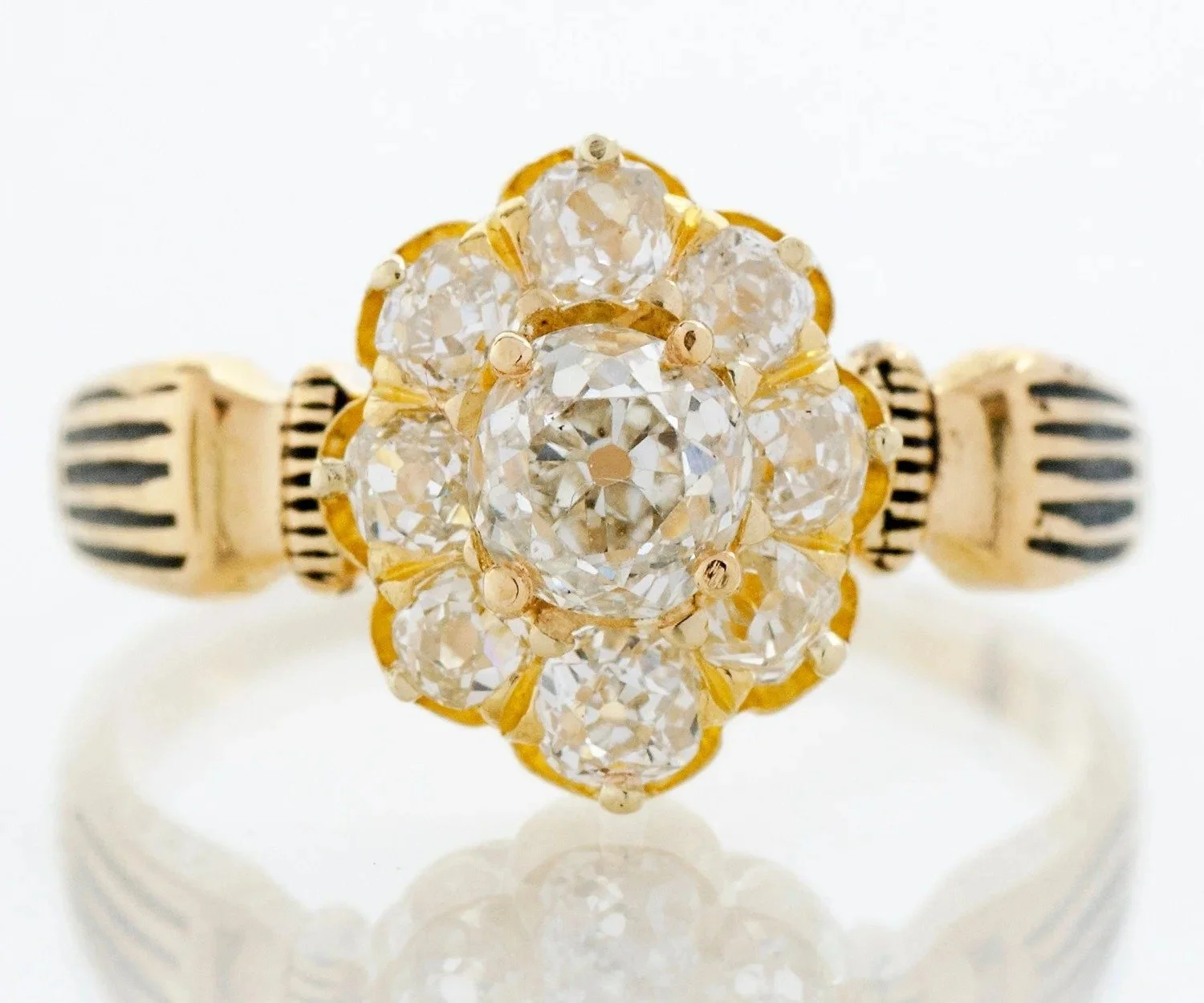
Late Victorian rings favored warm yellow and rose gold. Diamonds were cut by hand, usually as old mine cuts with a soft, cushion shape. Flower clusters, halos of small diamonds, and sentimental details were everywhere. Enamel, pearls, and colored stones often joined the diamonds.
How to spot it: Yellow or rose gold, mine cut diamonds, cluster or floral heads, and a hand-finished look.
Pictured at top: Victorian 14k yellow gold mine cut diamond flower cluster ring from our collection.
1900s Arts & Crafts Era
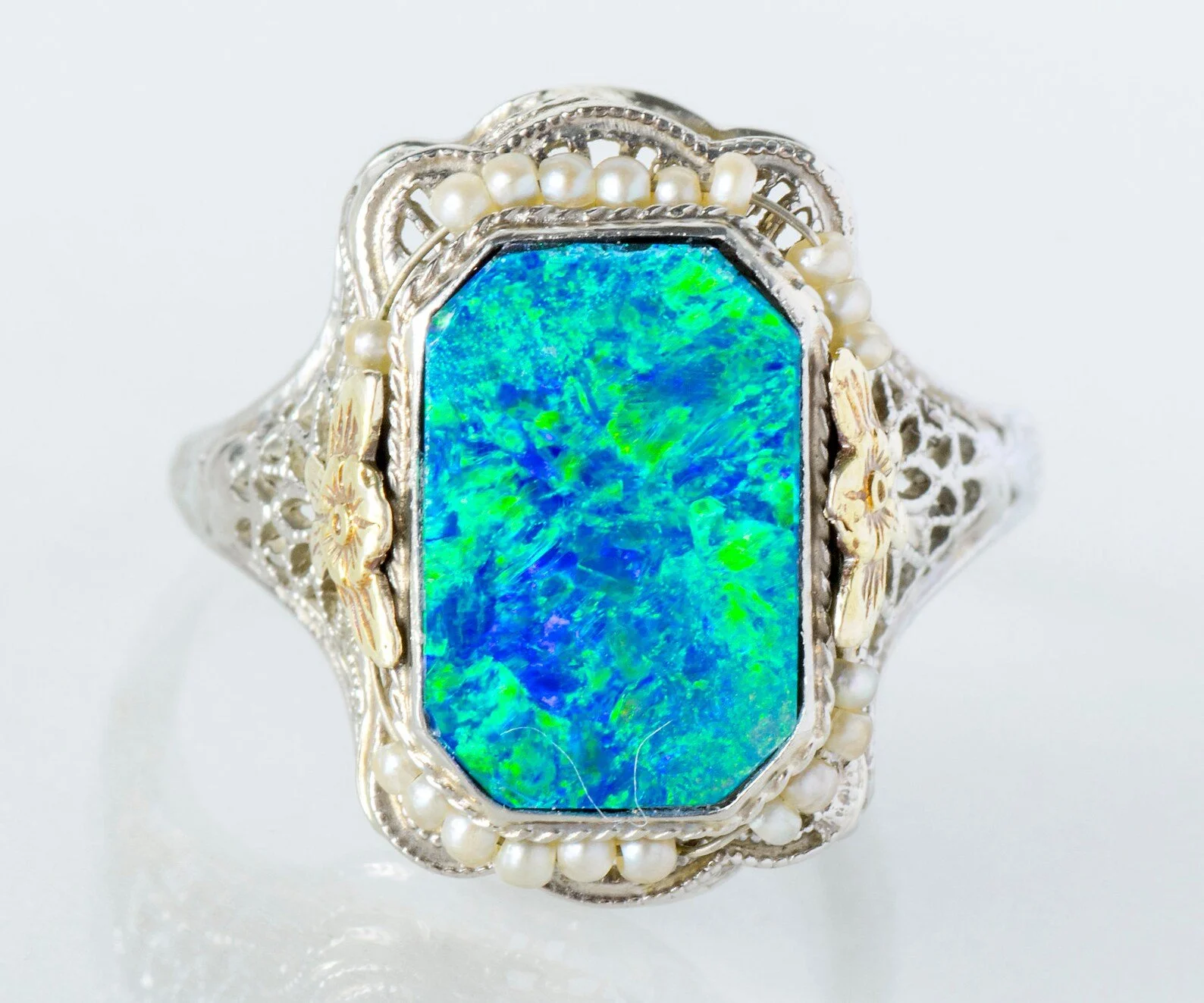
Platinum became popular in fine jewelry around the turn of the century. Platinum is strong, so jewelers could make delicate, lace-like designs that still held up. Many early 1900s rings are two-tone, with platinum on top and yellow gold below. Low profiles made them easy to wear every day.
How to spot it: Platinum-topped gold, fine filigree, milgrain edges, and a low, lacy setting.
Shown above: 1900s arts & crafts era ring from our collection.
1910s Engagement Rings (Edwardian)
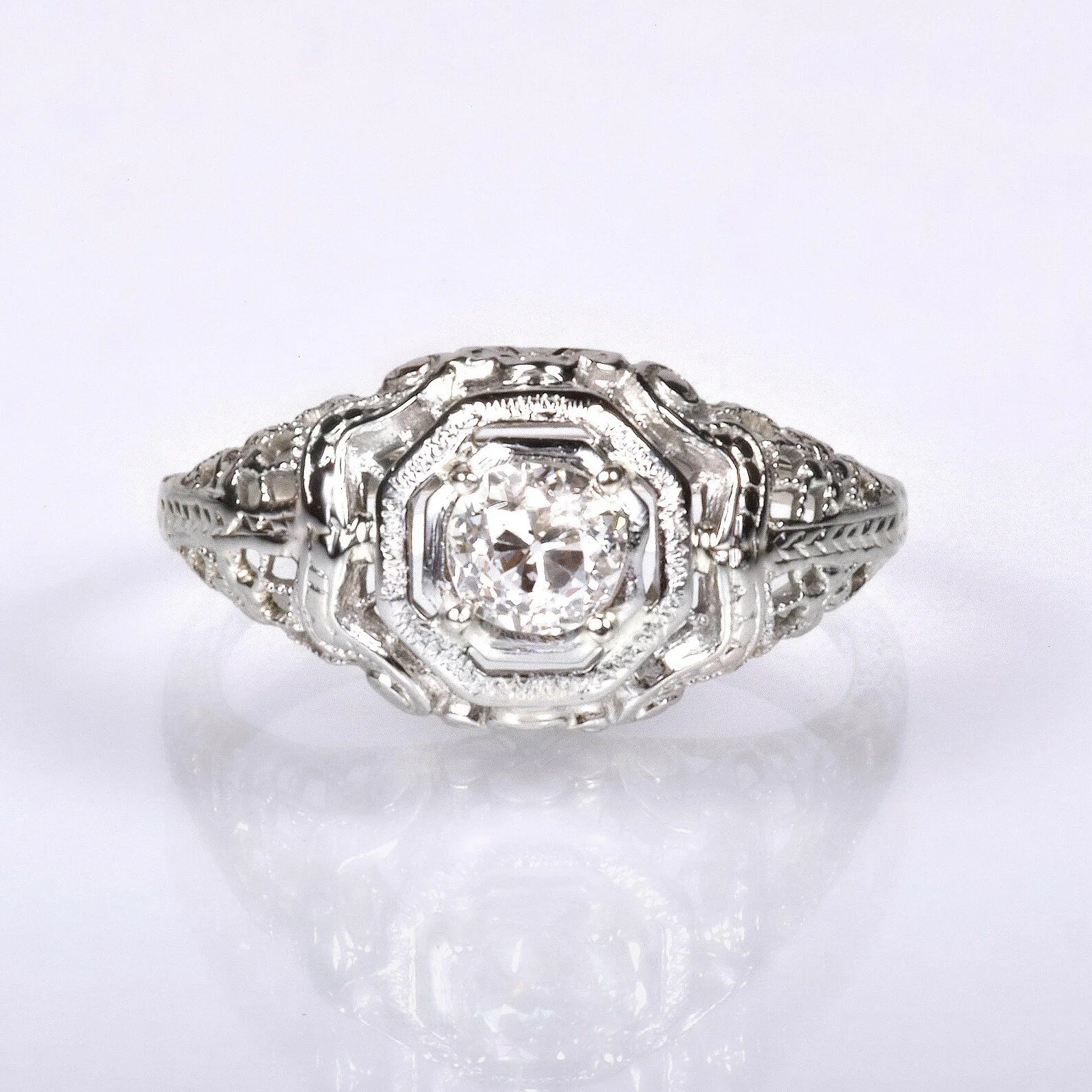
Edwardian engagement rings reached their peak in the 1910s. White metals, garlands, bows, and floral motifs defined the look. The old European cut diamond became the star. It's round, with broad facets and a small open culet that throws bold flashes of light.
How to spot it: White metal, floral or garland filigree, milgrain beading, and a round old European cut center.
Shown above: Early 1900’s Edwardian engagement ring from our collection.
1920s Engagement Rings (Art Deco)
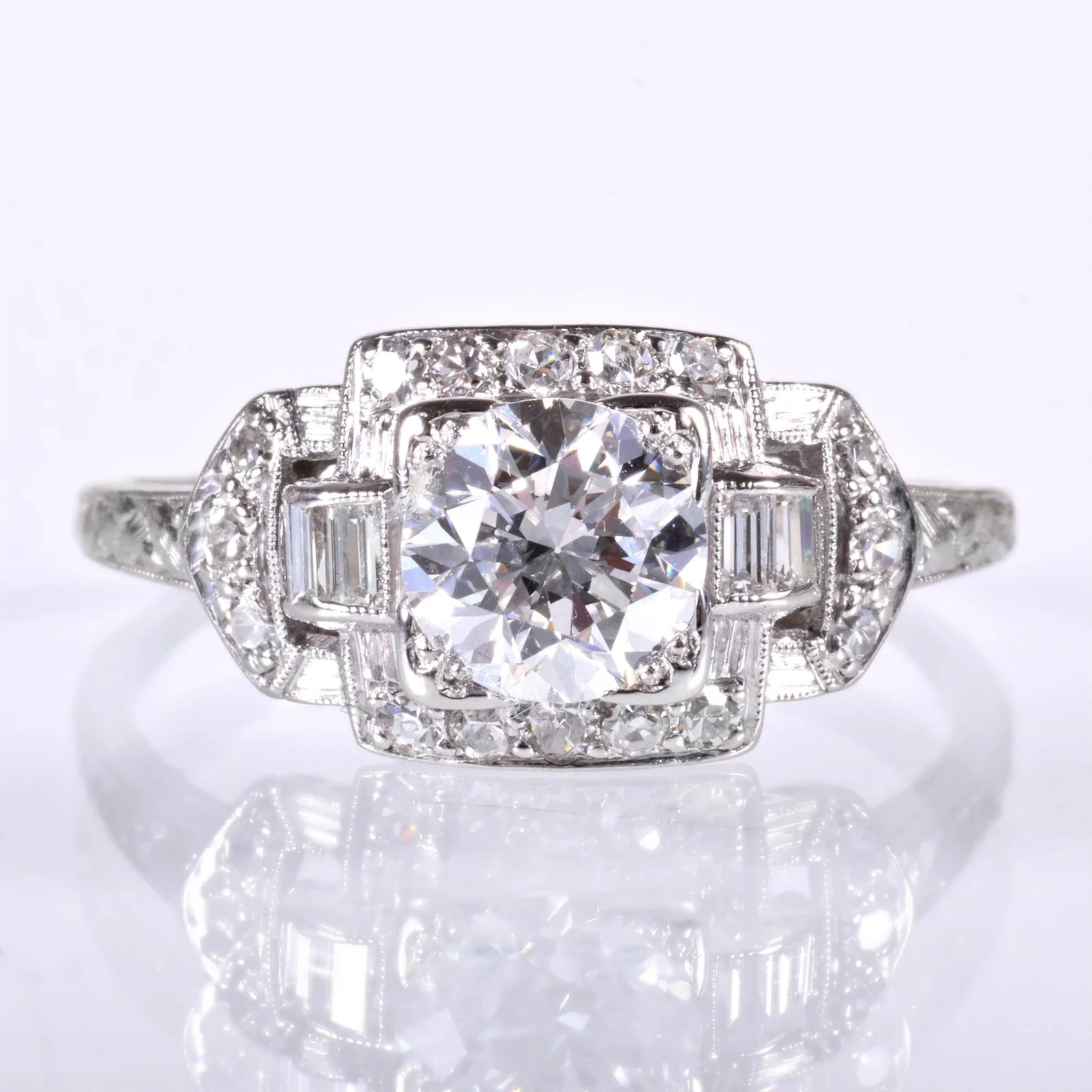
Art Deco engagement rings traded soft curves for bold geometry. Think stepped shapes, crisp symmetry, and pierced white gold filigree. Step cuts like emerald, Asscher, and baguette diamonds became fashionable. Small sapphire accents added a strong pop of color.
Art Deco engagement rings are among the most searched antique styles today. They look modern, even a century later.
How to spot it: Geometric outlines, white gold or platinum filigree, step-cut accents, and colored stone details.
Shown above: Antique Art Deco Platinum Diamond Engagement Ring from our collection.
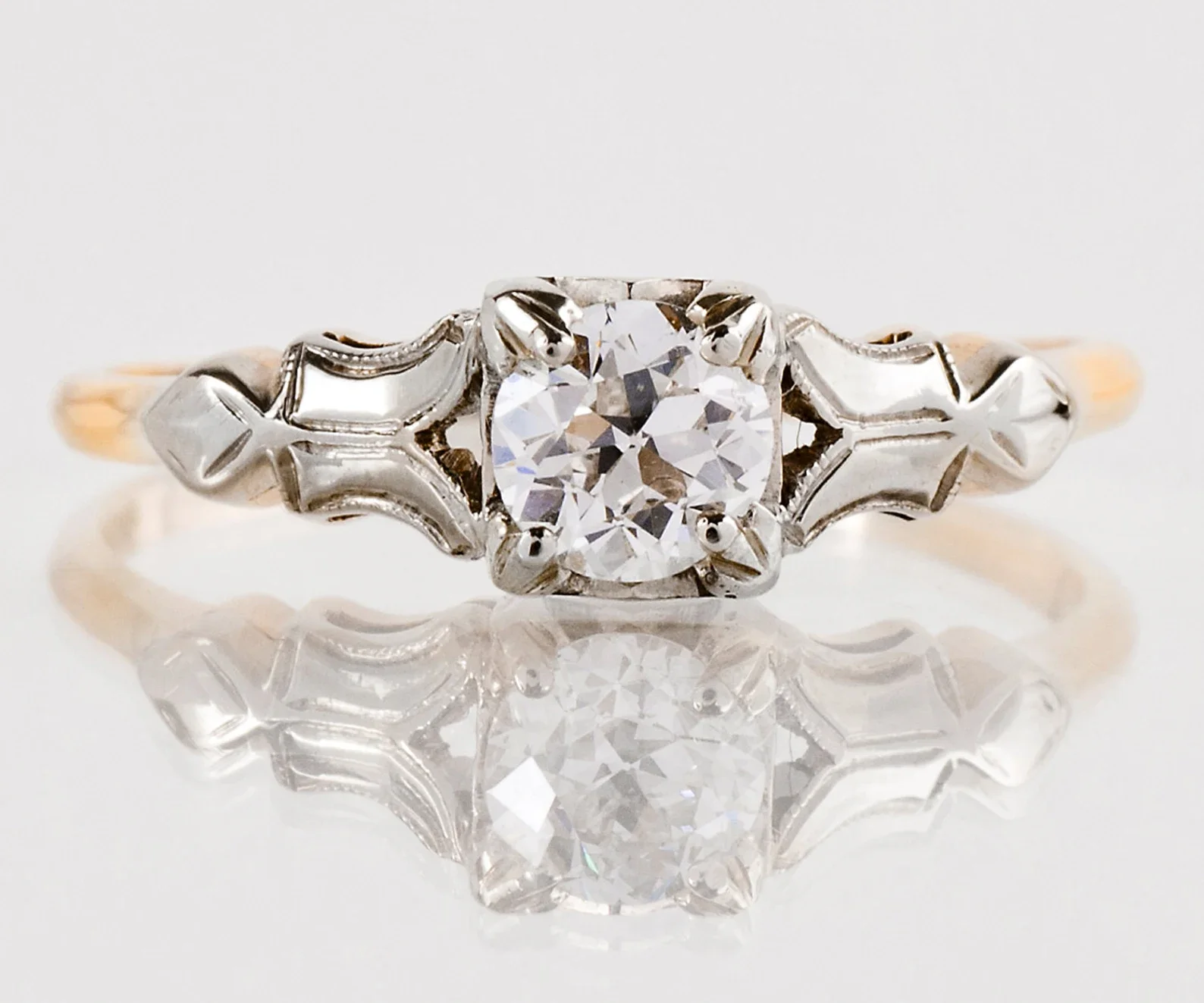
1930s Engagement Rings (Depression Era)
The Great Depression changed engagement rings fast. Budgets shrank, and so did center diamonds. Jewelers got creative with illusion settings, which surround a small diamond with shiny metal so it looks larger. Late Deco details, like French cut accents, stayed popular.
How to spot it: Smaller center stones, illusion heads, two-tone metal, and lingering Deco geometry.
Shown above: 1930s engagement ring from our collection.
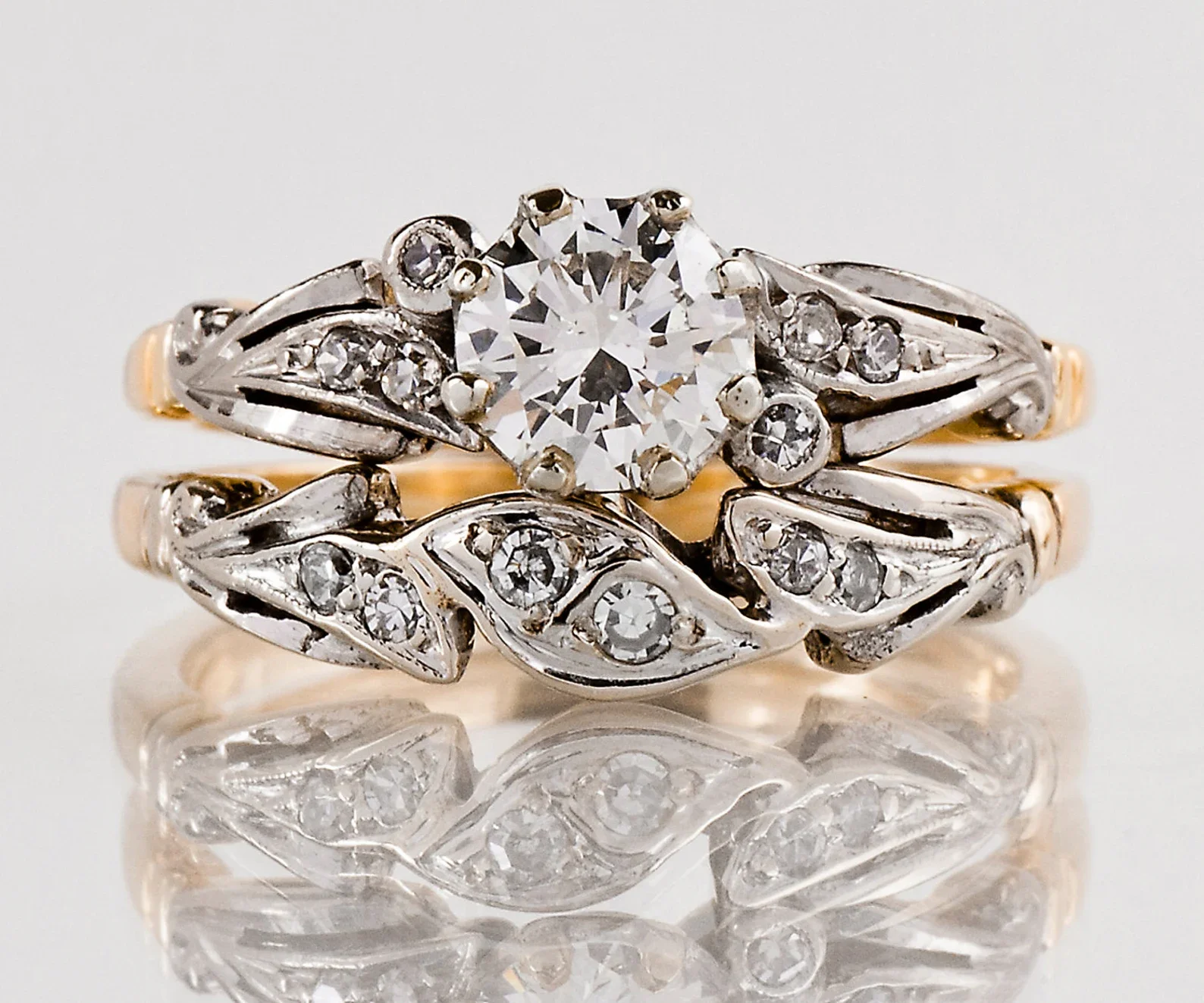
1940s Engagement Rings (Retro)
During World War II, platinum went to the war effort. Jewelers turned to yellow and rose gold instead. Retro engagement rings are bold and sculptural, with scrolls, fans, and curved shoulders. Diamonds were often small, so illusion and star settings stayed common.
In 1947, the slogan "A Diamond Is Forever" was written for De Beers. It helped make the diamond engagement ring an American standard.
How to spot it: Yellow or rose gold, chunky sculptural shoulders, small diamonds, and illusion settings.
Shown above: Vintage 1940's 18k Yellow & White Gold Diamond Wedding Set from our collection.
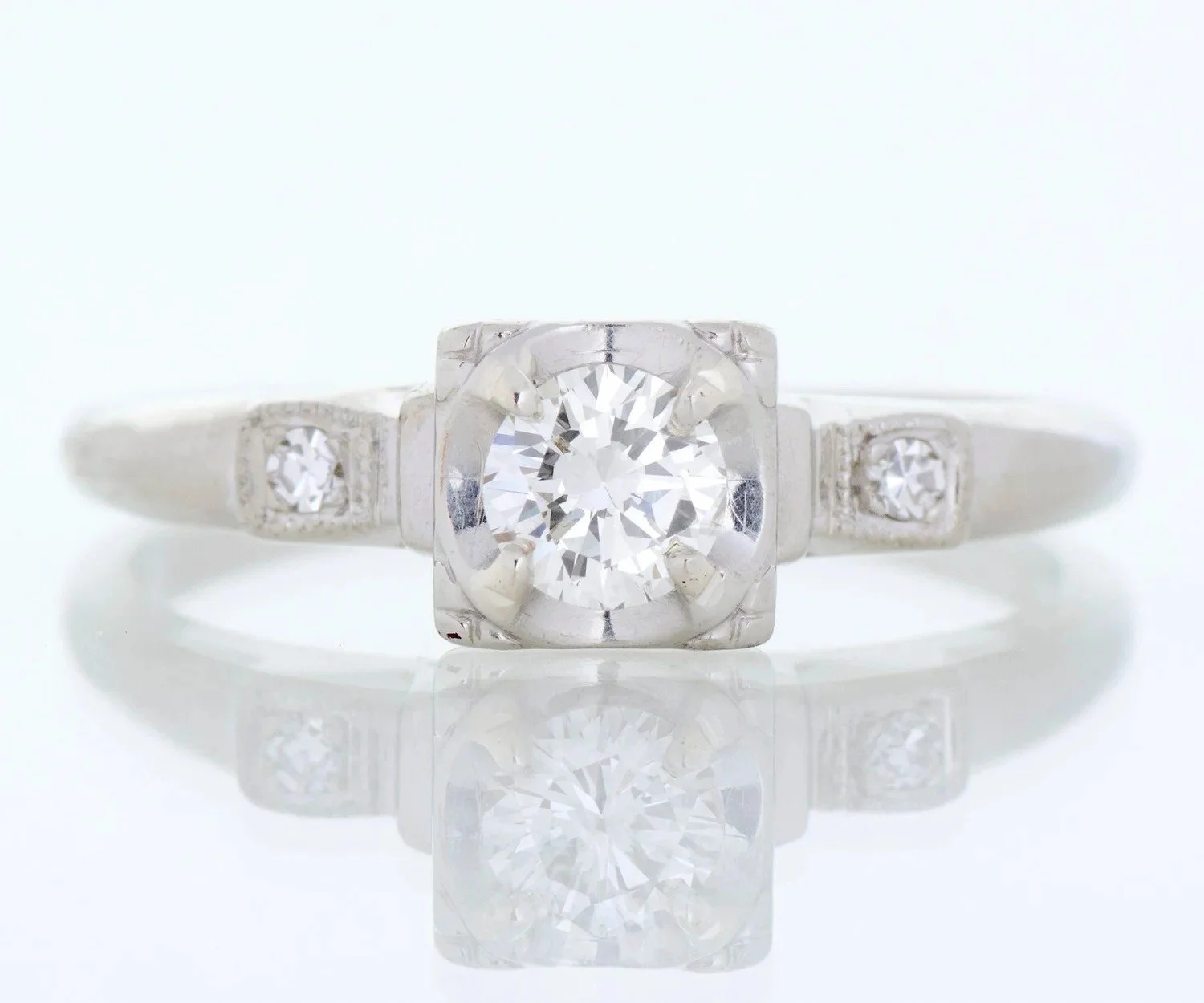
1950s Engagement & Wedding Rings (Mid-Century)
Postwar optimism brought bigger stones and cleaner lines. The modern round brilliant cut took over, with more sparkle than older cuts. White gold came back, and side diamonds framed the center stone. Matching wedding bands became part of the set.
How to spot it: Round brilliant center, side stones, clean geometric lines, and white gold.
Shown above: 1950s 14k white gold diamond engagement ring from our collection.
1960s Engagement Rings
Engagement rings in the 1960s went sleek. Large diamonds sat in streamlined white metal settings. Pear and other fancy shapes gained fans, and some couples chose colored center stones. The look was glamorous but simple.
How to spot it: White gold or platinum, a single statement stone, and a smooth, modern setting.
1970s Engagement & Wedding Rings
Yellow gold made a big comeback in the 1970s. Designs got bolder, with textured metal and organic, freeform shapes. Fancy shapes stayed popular. Near the end of the decade, the princess cut was introduced.
How to spot it: Yellow gold, textured or free-form bands, and fancy-shaped diamonds.
1980s Engagement & Wedding Rings
The 1980s believed more was more. Wide yellow gold bands, diamond clusters, and heavily detailed settings were everywhere. After 1981, sapphire center stones with diamond halos surged in popularity. Many couples chose matching wedding sets.
How to spot it: Yellow gold, thick bands, clusters, and colored stones framed by diamonds.
1990s Engagement Rings
The 1990s pushed back against '80s excess. Simple solitaires returned, and platinum and white gold replaced yellow gold. Princess cuts became a go-to shape. Side stones stayed small so the center diamond did the talking.
How to spot it: Platinum or white gold, a clean solitaire, and a princess or round center.
Love a Look From Another Decade?
Our collection covers antique and vintage engagement rings from the Victorian era through the mid-century. Every ring is an original piece, not a reproduction. Love a 1970s or 1980s look instead? Our custom jewelry design team can create a ring in the style of any decade.
Already have a family ring? We can resize or restore it so it's ready to wear.
Visit our Meridian showroom at 2590 N Eagle Rd. Walk-ins are welcome Tuesday through Saturday. Or call (208) 617-3577.